






















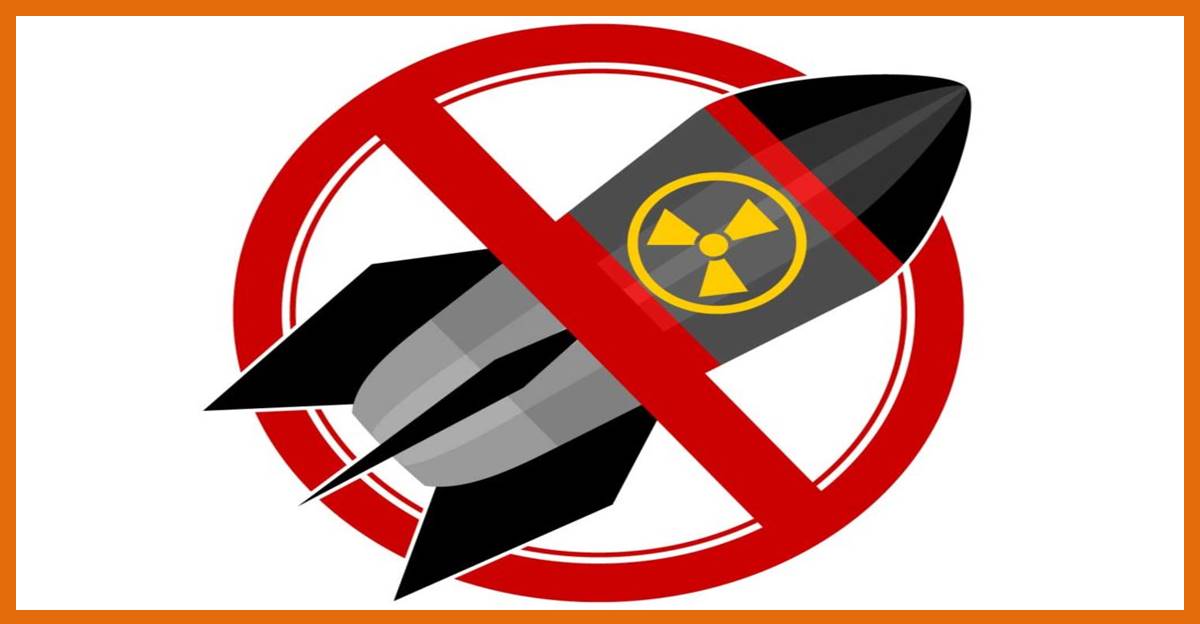
As the first treaty banning nuclear weapons has come into force, India announced on Friday that it does not accept the treaty and that it is not bound by any of its obligations.
In 2017, the United Nations General Assembly adopted the Treaty on the Prohibition of Nuclear Weapons, but none of the nine countries confirmed or suspected to possess nuclear weapons supported
The Ministry of Foreign Affairs claimed in a statement that India continues to have a high priority and remains committed to universal, non-discriminatory and verifiable nuclear disarmament.
“As far as the Treaty on the Prohibition of Nuclear Weapons (TPNW) is concerned, India did not participate in the negotiations on the TPNW and has consistently made it clear that it will not become a party to the Treaty,” the MEA said.
It claimed that India does not endorse the treaty and is not bound by any of the obligations that may emerge from it.
India believes that the treaty does not constitute or contribute to the improvement of international customary law, nor does it define any new principles or norms, the declaration said.
The MEA stated that India reiterates its commitment to the goal of a nuclear-weapon-free world.
India assumes that this objective can be accomplished through a step-by-step mechanism underpinned by a universal commitment and a negotiated multilateral global and non-discriminatory structure, as outlined in the working paper of the country entitled ‘Nuclear
‘Disarmament,’ sent to the UN General Assembly and the Disarmament Conference.
In this regard, India supports the launch of negotiations on the Comprehensive Nuclear Weapons Convention at the Conference on Disarmament, the world’s single multilateral negotiating platform on disarmament, which is functioning on a consensus basis, the MEA said.
India is prepared to work with all UN Member States towards the target of a nuclear-weapon-free world, it said.